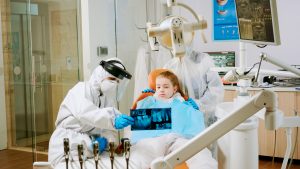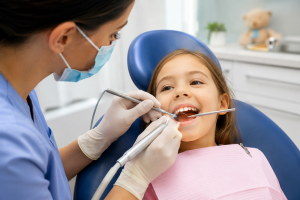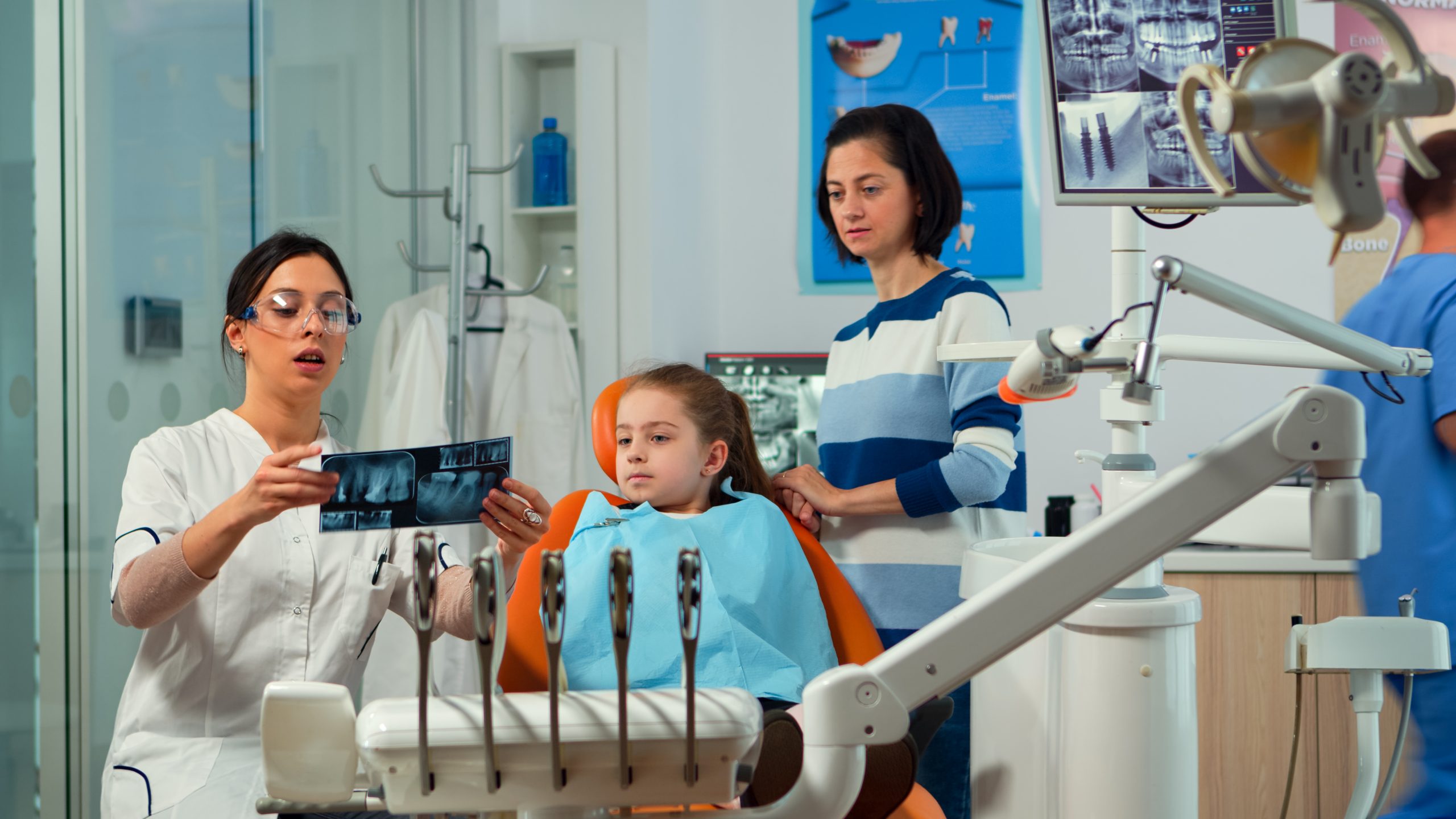
Many parents feel nervous when a dentist mentions taking X-rays of their child. That concern is completely understandable. But digital X-rays Jacksonville Beach dental offices use today are a significant step forward from the older film-based X-rays most adults grew up with. They use a fraction of the radiation, produce clearer images, and are considered very safe for both children and adults when used appropriately.
Understanding how they work helps parents and patients feel more confident about saying yes when X-rays are recommended.
What Are Digital X-Rays?
Digital X-rays are a modern way of taking images of the teeth, roots, and jaw. Instead of using traditional film that needs chemical processing, digital X-rays use a small electronic sensor placed in the mouth. The image appears on a computer screen almost instantly.
It is fast, painless, and considerably more effective than older X-rays. There is no waiting for the film to develop. The dentist can zoom in, change brightness, and let you see exactly what they are seeing right there and then.
For children especially, the speed and simplicity of the process make the experience much less stressful. If your child needs a pediatric dentist Jacksonville Beach families trust, digital X-ray technology is now a standard part of quality pediatric dental care.
How Much Radiation Do Digital X-Rays Actually Produce?
This is the question most parents want answered first — and the numbers are reassuring.
Digital X-rays use up to 80 to 90 percent less radiation than traditional film X-rays. To put that into everyday perspective:
| Source of Radiation | Approximate Exposure |
| Traditional dental X-ray | Around 0.150 mSv |
| Digital dental X-ray | Around 0.005 mSv |
| One day of normal background radiation | Around 0.010 mSv |
| A short airplane flight | Around 0.005 mSv |
A full set of digital dental X-rays exposes a patient to roughly the same radiation as a short plane journey — or simply spending a day outdoors. This context helps clarify just how minimal the exposure actually is.
Are They Safe for Children Specifically?
Children are more sensitive to radiation than adults because their cells divide more rapidly as they grow. This is precisely why pediatric dentistry has moved so firmly toward digital X-rays — the dramatically lower radiation dose addresses this concern directly.
Several additional measures are routinely used during dental X-rays for children:
- A lead apron is placed over the body to shield organs from any scattered radiation
- A thyroid collar to protect the thyroid gland in the neck
- The smallest effective sensor size to limit exposure to targeted areas only
- X-rays taken only when clinically necessary — not as a routine at every visit
A pediatric dentist for digital X-ray procedures will always follow the as-low-as-reasonably-achievable principle — meaning no X-ray is taken unless there is a clear clinical reason for it.
Why Are Dental X-Rays Necessary at All?
Some parents wonder whether X-rays can simply be skipped. Understanding what they reveal makes it clear why they are an important diagnostic tool.
Digital X-rays allow dentists to see:
- Cavities forming between teeth that are invisible to the naked eye
- How permanent teeth are developing beneath the gum line in children
- The roots of teeth and the bone that surrounds them
- Infections or abscesses that show no visible symptoms yet
- Crowding or spacing issues in developing jaws
- The position of wisdom teeth in older patients
Without X-rays, a significant number of dental problems would go undetected until they became painful, expensive, or complicated to treat. Early detection — which X-rays make possible — leads to simpler treatment and better outcomes.
How Often Should Children and Adults Get Dental X-Rays?
Frequency depends on the individual patient’s risk level, age, and dental history.
For children:
- Bitewing X-rays—which show the back teeth—are typically recommended every six to twelve months for children at higher cavity risk
- Children at lower risk may only need them every twelve to twenty-four months
- Panoramic X-rays—which show all the teeth and jaw in one image—may be taken every few years to monitor overall development
For adults:
- Bitewing X-rays are typically recommended every one to two years for patients with no significant history of decay
- Adults with a history of dental problems or active treatment may need them more frequently
- Full mouth X-rays are usually taken every three to five years
The dentist tailors X-ray recommendations to each individual child based on their unique dental development and cavity risk—never more than necessary, always when clinically indicated.
What Makes Digital X-Rays Better Than Traditional Film X-Rays?
Beyond the radiation reduction, digital X-rays offer several practical advantages.
For patients:
- The sensor is placed in the mouth for seconds rather than the longer positioning needed for film
- No chemical taste from film processing materials
- Images can be reviewed together — patient, parent, and dentist looking at the same screen
- Images are stored digitally and can be easily compared over time to track changes
For dentists:
- Images are clearer and can be enhanced digitally for better diagnosis
- Instant results mean faster decisions and no delays in treatment planning
- Digital records reduce the risk of images being lost or degraded over time
- Easier to share with specialists when referrals are needed
The combination of safety, speed, and image quality makes digital X-rays the clear standard in modern dental care.
Addressing Common Concerns Parents Have
It is natural to have questions. Here are some of the most common concerns parents raise:
My child just had X-rays at the doctor—is it safe to have more at the dentist?
Yes. Dental X-rays and medical X-rays use different targeted areas and serve different diagnostic purposes. The combined exposure from routine dental digital X-rays remains well within safe levels.
What if I am pregnant?
Pregnant patients should inform their dentist before any X-rays are taken. While digital X-rays are low-exposure and the abdomen is shielded, most dentists will postpone non-urgent X-rays until after delivery as a precaution.
Can I decline X-rays for my child?
You always have the right to ask questions and make informed decisions. However, declining recommended X-rays may mean certain problems go undetected. Discussing your concerns openly with your dentist allows them to explain the specific clinical reason for each X-ray recommendation.
Seeing Clearly Is the Foundation of Good Dental Care
Digital X-rays are not just a routine box to tick. They are one of the most important tools a dentist has for keeping teeth and gums healthy over the long term. For children, whose teeth and jaws are constantly developing and changing, they are especially valuable.
The safety profile of digital X-rays — particularly in pediatric dentistry — is well established. The benefits of catching problems early far outweigh the minimal and carefully managed exposure involved.
If you are looking for digital X-rays near you for your child or yourself, choosing a practice that uses the latest digital technology and follows evidence-based guidelines gives you the best of both worlds—accurate diagnosis and peace of mind.
Your Child’s Smile Deserves the Very Best Care
Questions about your child’s dental health should always be welcomed — and answered clearly.
At Fishman Pediatric Dentistry, every decision — including when and how X-rays are taken — is made with your child’s safety and well-being as the absolute priority. The team uses the latest digital X-ray technology, takes every precaution to minimize exposure, and always takes time to explain why an X-ray is being recommended. If you have questions about your child’s dental care or would like to book an appointment, reach out to us today. Your child’s healthy smile starts with care you can trust.
Frequently Asked Questions
Q1. At what age should a child receive their first X-rays?
Most children should have their first set of X-rays when they are about two or three years old and when several teeth have grown in and are tightly grouped together, so cavities can no longer be detected during a routine visual examination.
Q2. Do digital X-rays hurt?
No. The sensor placed in the mouth may feel slightly uncomfortable for a moment, but the process is quick and painless. Most children tolerate it very well, especially with a gentle and patient dental team.
Q3. How will digital X-ray images be saved and kept safe?
Your digital X-ray images are saved to your file in your electronic dental record and are protected by the same privacy and security measures as all other medical files.
Q4. Will digital X-rays be able to detect all dental issues?
Digital X-rays will help your dentist see the structures beneath and in between the teeth—cavities, bone loss, and roots- as well as detect problems, but the images are not a good way to diagnose and view some soft tissue problems. Your dentist will be able to use X-rays in conjunction with your regular examination.